Alie's Glossary
Alie's Glossary
This glossary presents important vocabulary related to Social Science and psychology. The purpose of this glossary is to help better understand key concept used to study human behavior, society, and social interactions! Hope you learn well!
- behavior
- The way in which one acts or conducts oneself, especially toward others.
- Example: Children learn social skills by observing the behavior of adults.
- en: comportement

- bias
- noun
- Prejudice in favor of or against one thing, person, or group compared with another, usually in a way considered to be unfair.
- Example: Personal bias can affect how people interpret information.
- en: bias

- culture
- noun
- The shared set of beliefs, values, customs, behaviors, and artifacts that define a group or society, encompassing everything from language and religion to cuisine, music, and social norms.
- Example: Travelling helps you understand and appreciate different cultures.
- en: culture

- development
- noun
- The process of growth, advancement, or creation, referring to positive, gradual changes in people, organizations, or systems.
- Example: The country's economic development has improved the standard of living.
- en: dévellopement
- discrimination
- noun
- The unjust or prejudicial treatment of different categories of people, especially on the grounds of ethnicity, age, sex, or disability.
- Example: Discrimination based on race or gender is unfair and illegal in many countries.
- en: discrimination

- economy
- The wealth and resources of a country or region, especially in terms of the production and consumption of goods and services.
- Example: The country's economy is growing faster than last year.
- en: économie

- ethics
- noun
- The systematic study of moral principles and values that guide human conduct to determine right from wrong, good from bad, and acceptable from unacceptable behavior.
- Example: Medical students learn ethics to make the right decisions in their practice.
- en: éthique
- history
- noun
- The study of past events, particularly in human affairs.
- Example: I love studying history to understand how past events shaped the world.
- en: histoire

- human
- noun
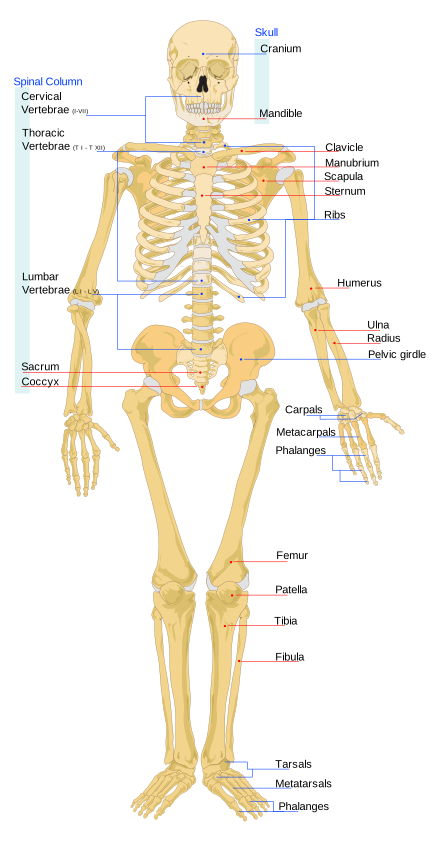
- A man, woman, or child of the species Homo sapiens or other (extinct) species of the genus Homo ; a human being.
- Example: He is human, just like me.
- en: humain
- inequality
- noun
- An unfair situation in which some people have more rights or better opportunities than other people.
- Example: Economic inequality can create social tensions in a country.
- en: inégalité

- norms
- noun
- A standard or pattern, especially of social behavior, that is typical or expected of a group. plural noun: norms.
- Example: Social norms help people understand what behavior is acceptable in the society.
- en: normes
- politics
- noun
- The activities associated with the governance of a country or other area, especially the debate or conflict among individuals or parties having or hoping to achieve power.
- Example: He is very interested in politics and often debates current events.

- psychology
- noun
- The scientific study of the human mind and it's functions, especially that affecting behavior in a given context.
- Example: She is studying psychology to understand human behavior.
- en: psycologie
- social class
- noun
- A hierarchical grouping of individuals in society based on shared socioeconomic status, primarily determined by wealth, income, education, occupation, and social network.
- Example: People from different social classes often have very different life experiences.
- en: classe sociale

- social institutions
- noun
- Established, enduring sets of norms, roles, and relationships designed to meet fundamental societal needs, providing structure, stability, and order to social life.
- Example: Family, education, and religion are important social institutions that shape society.
- en: institutions sociale

- social mobility
- noun
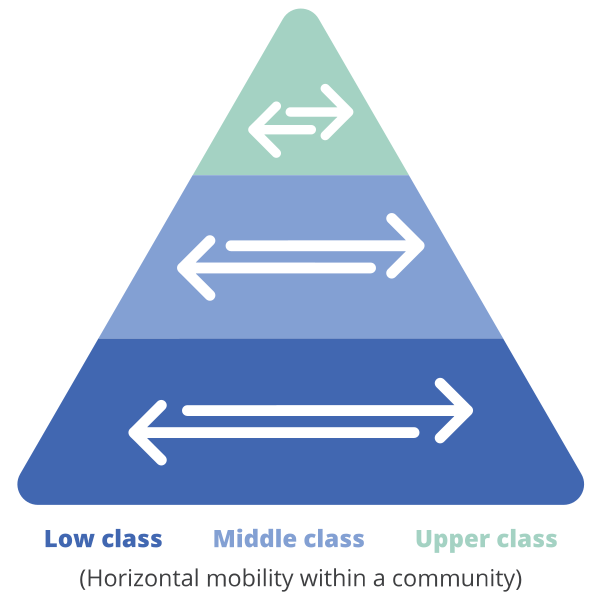
- The movement of individuals, families, or groups between different socio-economic strata or positions within a society's hierarchy.
- Example: Education is a key factor in promoting social mobility.
- en: mobilité sociale
- social status
- noun
- An individual's relative rank, prestige, and standing within a social hierarchy, determining their level of respect, influence, and lifestyle.
- Example: A person's social status can influence how others treat them.
- en: statut social

- socialization
- noun
- The lifelong sociological process through which individuals learn and internalize the norms, values, behaviors, and social skills needed to function as proficient members of society.
- Example: Socialization helps children learn the values and rules of their society.
- en: socialisation
- society
- noun
- A society is a large, organized group of people who live together in a shared territory, interacting regularly and following common laws, customs, and cultural expectations. It acts as an interdependent system where members cooperate to meet needs, share resources, and create social relationships.
- Example: Society influences how people think and behave.
- en: société

- sociology
- noun
- Sociology is the scientific and systematic study of human society, social relationships, interaction, and culture. It examines how social structures—such as institutions, communities, and organizations—influence behavior and shape everyday life, ranging from intimate family dynamics to global social processes.
- Example: I study sociology to improve the learning of my environment.
- en: sociologie

Commentaires
Enregistrer un commentaire